Journaling

Profitable Traders Are Boring
Profitable Traders Are Boring.
They don’t chase every move.
They don’t revenge trade.
They don’t need to trade


A trading journal is one of the most talked-about tools in trading, yet also one of the most misunderstood.
Beginners often ask whether they really need one, while professional traders focus on how to extract performance edge from it.
This FAQ-style guide answers the most frequently asked questions about trading journals, covering psychology, performance, discipline, analytics, and professional usage all in one place.
A trading journal is a structured system that records your trades, decisions, emotions, and outcomes so you can analyze and improve performance over time.
It is not just a list of buy and sell prices.
A real trading journal tracks behavior, discipline, and decision quality.
Yes, beginners need a trading journal more than professionals.
Early mistakes in trading are usually:
Emotional
Impulsive
Repetitive
Undocumented
A trading journal helps beginners:
Understand why trades failed
Learn risk management faster
Avoid overtrading
Build discipline early
 The earlier you start journaling, the faster your learning curve becomes.
No.
This is one of the biggest misconceptions.
Profitable traders became profitable because they journaled, not the other way around.
A trading journal is a learning tool, not a reward for success.
A trading journal improves profitability by:
Identifying high-probability setups
Eliminating losing patterns
Improving risk-to-reward consistency
Reducing emotional mistakes
Increasing rule adherence
Trading improves when decisions are reviewed, not when markets are predicted.
A complete trading journal records:
Trade rationale
Strategy used
Risk management details
Execution quality
Emotional state
Post-trade reflection
Professional traders journal behavior, not just numbers.
Yes and it’s often the difference between consistent and inconsistent traders.
Most losses occur due to:
Fear
Greed
Revenge trading
Overconfidence
Impatience
A trading journal helps you:
Spot emotional triggers
Reduce impulsive decisions
Trade with clarity under pressure
Your emotions are data & ignoring them doesn’t remove their influence.
After every trade – quick notes
Weekly reviews – pattern identification
Monthly reviews – strategy evaluation
Professional traders spend more time reviewing than trading.
Absolutely.
A journal creates accountability:
You think twice before breaking rules
You reduce impulsive trades
You follow predefined setups
Knowing you must record a trade changes how you take it.
| Trade Log | Trading Journal |
|---|---|
| Records numbers | Records decisions |
| Entry & exit only | Strategy, emotion, execution |
| No learning | Continuous improvement |
| Passive | Active performance system |
A trade log tracks what happened.
A trading journal explains why it happened.
Free journals are useful for beginners but they usually lack:
Analytics
Emotional tracking
Strategy performance insights
Long-term scalability
Serious traders eventually move to digital trading journals for deeper analysis.
Yes.
Investors benefit from journaling by:
Avoiding emotional decisions
Tracking conviction vs outcome
Improving portfolio discipline
Reviewing investment thesis
Journaling isn’t just for fast traders, it’s for thoughtful decision-makers too.
Professional traders use journals to:
Optimize strategies
Measure execution efficiency
Analyze drawdowns
Track discipline score
Improve psychological stability
They don’t journal every thought, they journal what matters.
Digital trading journals offer:
Faster analysis
Data visualization
Strategy comparison
Behavioral insights
Long-term scalability
Manual journaling builds awareness.
Digital journaling builds performance intelligence.
Most traders notice improvements in:
2–4 weeks for discipline
1–3 months for strategy clarity
3–6 months for consistency
Journaling compounds the longer you do it, the more powerful it becomes.
Common mistakes:
Inconsistent updates
Dishonest entries
No weekly review
Focusing only on profits
Ignoring emotions
A journal only works when it’s used with intention.
Yes, especially profitable ones.
Some profitable trades hide:
Poor execution
Rule violations
Emotional decisions
A good outcome doesn’t always mean a good process.
No.
A trading journal refines a strategy, it does not replace one.
Think of it as:
Strategy = engine
Journal = diagnostics
Lincfolio is built for traders who treat trading as a craft.
It helps traders:
Track performance intelligently
Analyze behavior and discipline
Identify profitable patterns
Improve consistency with clarity
Lincfolio is not just a journal, it’s a performance system.
Trading journals are not optional for serious traders, they are essential.
Whether you’re a beginner learning discipline or a professional optimizing edge, a trading journal turns experience into skill.
Markets reward awareness.
Journals build awareness.
 Start trading with intention. Start journaling with LINCFOLIO.
Profitable Traders Are Boring.
They don’t chase every move.
They don’t revenge trade.
They don’t need to trade
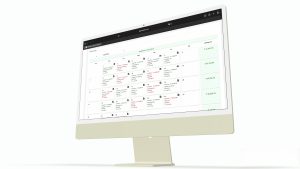
What does a profitable trader’s week actually look like?
It isn’t filled with constant trades or perfect predictions. It’s
Most traders spend years searching for a profitable strategy.
Few spend time understanding themselves.
A strategy tells you
Most traders don’t fail because of strategy.
They fail because they never truly understand their own behavior.
The
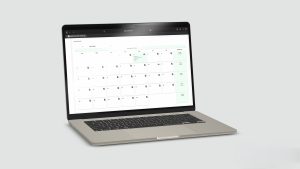
Most traders don’t lose because of bad strategies.
They lose because they repeat the same mistakes every single week
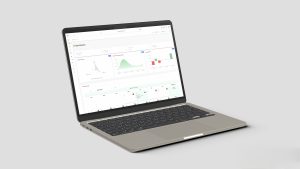
Most traders believe their losses come from poor strategies or bad market conditions. The truth is far simpler: they don’t