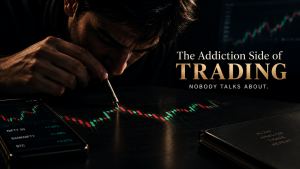
Financial markets reward discipline, data, and consistency. Yet most traders operate in a way that resembles gambling more than professional decision-making.
They open trades based on instinct.
They close trades based on emotion.
And when the trade is over, they move on without ever analyzing what actually happened.
No records. No review. No learning.
If a trader cannot clearly answer why a trade was taken, how it performed, and what could be improved, then the process isn’t trading, it’s speculation without accountability.
Professional traders understand one critical truth:
Performance improves only when it is measured.
Without records, there is no measurement.
Without measurement, there is no improvement.
The Difference Between a Gambler and a Trader
A gambler focuses on outcomes.
A trader focuses on process.
| Gambler | Professional Trader |
|---|
| Relies on intuition | Relies on data |
| Remembers only big wins or losses | Tracks every trade |
| Makes emotional decisions | Follows structured rules |
| Learns slowly | Learns systematically |
Both may experience wins and losses in the short term.
But over time, the trader who tracks performance develops a statistical edge, while the gambler eventually loses to randomness.
The Hidden Cost of Not Tracking Your Trades
Many traders underestimate the damage caused by not recording their activity.
The consequences are deeper than most realize.
1. You Never Discover Your Real Edge
Most traders believe they know their best strategies.
But without recorded data, this belief is often inaccurate.
You might discover that:
- Your breakout trades perform poorly
- Your pullback setups generate most profits
- Your best trades happen at specific times of the day
Without records, these patterns remain invisible.
And invisible patterns cannot be optimized.
2. Emotional Bias Distorts Memory
Human memory is unreliable.
Traders tend to remember:
- big wins
- painful losses
- dramatic trades
But they forget the dozens of average trades that define overall performance.
This leads to dangerous misconceptions like:
“My strategy works most of the time.”
In reality, the data may reveal the opposite.
Recording trades replaces emotion with evidence.
3. Mistakes Repeat Forever
If a trader does not track mistakes, those mistakes repeat indefinitely.
Common recurring issues include:
- Overtrading
- Ignoring stop losses
- Entering trades impulsively
- Increasing position size after losses
- Revenge trading
Without a journal, traders rarely recognize how frequently these behaviors occur.
Tracking trades forces self-awareness.
And awareness is the first step toward discipline.
Why Elite Traders Journal Every Trade
Professional traders treat trading like a performance profession, similar to elite sports or business leadership.
Athletes review game footage.
Executives analyze quarterly reports.
Pilots follow strict flight logs.
Trading requires the same level of documentation.
A structured trading journal helps traders answer questions like:
- Which setups generate the highest returns?
- What is the average risk-to-reward ratio?
- What time of day produces the best results?
- Which mistakes appear repeatedly?
Over time, these insights transform trading from random decision-making into a structured system.
What a Proper Trading Record Should Include
A professional trading record goes far beyond simply writing down profit or loss.
Key information should include:
Trade Details
- Entry price
- Exit price
- Position size
- Market instrument
- Date and time
Strategy Information
- Trade setup
- Technical reasoning
- Market conditions
Risk Management
- Stop loss level
- Risk per trade
- Risk-reward ratio
Emotional State
- Confidence level
- Psychological factors
- Discipline adherence
When this information is collected consistently, traders gain clear performance insights.
The Power of Data-Driven Trading
Once trades are recorded consistently, something powerful happens.
Patterns begin to emerge.
Traders start identifying:
- profitable setups
- losing strategies
- emotional mistakes
- optimal trading conditions
Instead of guessing what works, they know what works.
Data replaces assumptions.
This shift is what separates casual traders from consistently profitable ones.
Turning Trading Into a Measurable Business
Serious traders approach trading as a business of decision-making under risk.
And every business relies on data.
A restaurant tracks sales.
A company tracks revenue and expenses.
A professional trader tracks trades.
Without these records, there is no way to improve operations.
Trading is no different.
The moment traders start analyzing their performance objectively, their growth accelerates.
From Random Trades to Structured Performance
Many traders spend years searching for the perfect strategy.
But often, the real breakthrough comes from something far simpler:
reviewing their own trading behavior.
Journaling transforms trading into a feedback loop:
- Execute trades
- Record decisions
- Analyze results
- Improve the process
This loop is what drives consistent improvement.
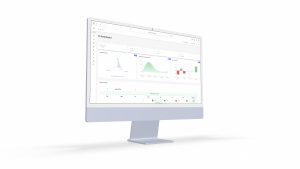
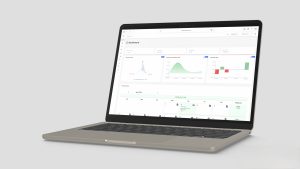
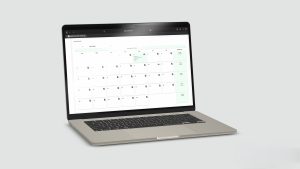
Where Modern Trading Journals Make the Difference
Traditional notebooks and spreadsheets can capture trade details, but they often fail to provide deeper insights.
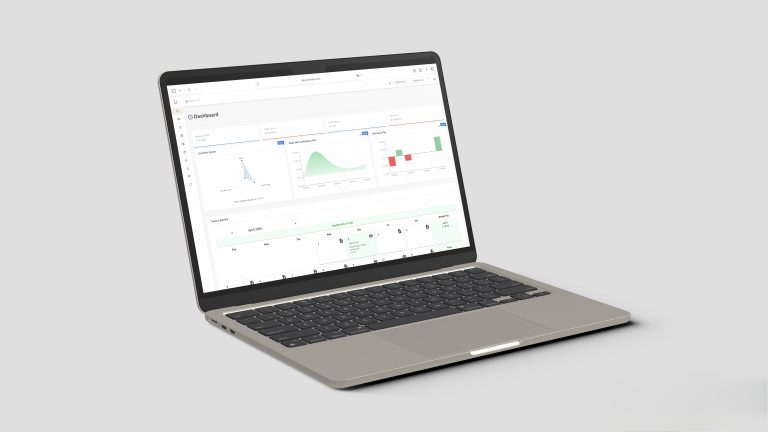
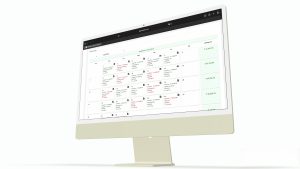
Modern trading journals allow traders to:
- automatically track performance
- analyze strategy statistics
- measure risk consistency
- review trade history efficiently
Instead of manually sorting through scattered notes, traders can see clear analytics about their decision-making.
This clarity dramatically accelerates learning.
The Bottom Line
Successful trading is not about predicting markets perfectly.
It is about continuously improving decision quality.
And improvement requires evidence.
Traders who rely on memory operate blindly.
Traders who track their performance operate intelligently.
Without records, trading becomes gambling.
With structured records, trading becomes a professional discipline.
The difference between the two often determines who survives in the markets and who doesn’t.