Every Trader Is Looking in the Wrong Place
Ask a trader what they need to become profitable, and most will answer the same way:
“A better strategy.”
A new indicator.
A new course.
A new mentor.
A new setup.
The search never ends.
Yet many traders spend years jumping from one strategy to another while never stopping to analyze the one thing that actually determines long-term success:
Their own behavior.
The uncomfortable truth is that most traders don’t have a strategy problem.
They have a process problem.
And that’s exactly why a trading journal can be more valuable than a profitable strategy.
The Strategy Myth
The trading industry has convinced traders that profitability is hidden inside some secret formula.
The reality is much less exciting.
Thousands of profitable traders use completely different strategies:
Price Action
Supply & Demand
ICT Concepts
Trend Following
Breakout Trading
Mean Reversion
If profitability depended solely on strategy, only one of these approaches would work.
Yet all of them can be profitable.
Why?
Because the edge is rarely the strategy itself.
The edge comes from how consistently the trader executes it.
And consistency cannot be developed without measurement.
What Happens When You Don’t Journal
Imagine running a business without tracking:
Revenue
Expenses
Customers
Profit Margins
It would be impossible to improve.
Yet this is exactly how most traders operate.
They remember their winning trades.
They forget their losing trades.
They overestimate their discipline.
They underestimate their mistakes.
Without data, every trading decision becomes based on emotion and memory.
And memory is a terrible performance tool.
The Hidden Value of a Trading Journal
A trading journal does far more than record entries and exits.
It creates awareness.
It reveals patterns you would never notice otherwise.
Over time, your journal begins answering questions such as:
Which setups perform best?
What market conditions suit your strategy?
What mistakes keep repeating?
What time of day produces your best results?
How often do emotions affect decisions?
Which trades should never have been taken?
This information is worth more than discovering another strategy.
Because it is personalized.
It is your edge.
The Difference Between Guessing and Knowing
Most traders think they know why they are losing.
Few actually know.
A trader might believe:
“My strategy doesn’t work.”
But after reviewing 200 journal entries, they discover:
Their strategy works perfectly.
Their risk management doesn’t.
Their biggest losses come from revenge trading.
Their profitable trades follow the rules.
Their losing trades don’t.
The strategy was never the problem.
The trader was.
A journal exposes that reality.
And reality is where improvement begins.
Why Professional Traders Track Everything
Professional athletes watch game footage.
Elite businesses track performance metrics.
Top investors analyze every decision.
The world’s best performers are obsessed with feedback.
Trading should be no different.
Every trade leaves behind valuable information.
Every win teaches something.
Every loss teaches something.
The question is:
Are you collecting that information or wasting it?
The traders who improve fastest are not necessarily the smartest.
They are simply the ones who learn from their mistakes faster than everyone else.
Your Data Is More Valuable Than Someone Else’s Strategy
Many traders spend months searching YouTube for the perfect setup.
Meanwhile, the answers are already sitting inside their own trading history.
Your journal contains:
Your strengths
Your weaknesses
Your habits
Your emotional triggers
Your best opportunities
No guru can provide information more valuable than that.
Because nobody understands your trading better than your own data.
The Real Purpose of Journaling
A journal is not a diary.
It is a performance improvement system.
The goal is not to record trades.
The goal is to become a better trader.
Every entry should help answer one question:
“What can I do better tomorrow than I did today?”
Over weeks, those improvements compound.
Over months, they become habits.
Over years, they become your edge.
The Traders Who Survive
Most traders eventually quit.
Not because they lack intelligence.
Not because they lack passion.
But because they never develop a system for learning from their mistakes.
Without feedback, progress becomes invisible.
Without progress, motivation disappears.
A trading journal solves this problem.
It turns random experiences into measurable lessons.
It transforms mistakes into data.
And data becomes improvement.
Final Thoughts
The next time you’re tempted to search for another indicator, another strategy, or another shortcut, ask yourself:
Have you fully understood the strategy you already have?
Have you reviewed your last 100 trades?
Have you identified your biggest mistakes?
Have you measured your performance objectively?
Because the truth is simple:
A profitable strategy can make money.
But a trading journal can make you better.
And a better trader can profit from almost any strategy.
That’s why a trading journal isn’t just another tool.
It’s the foundation upon which every successful trading career is built.
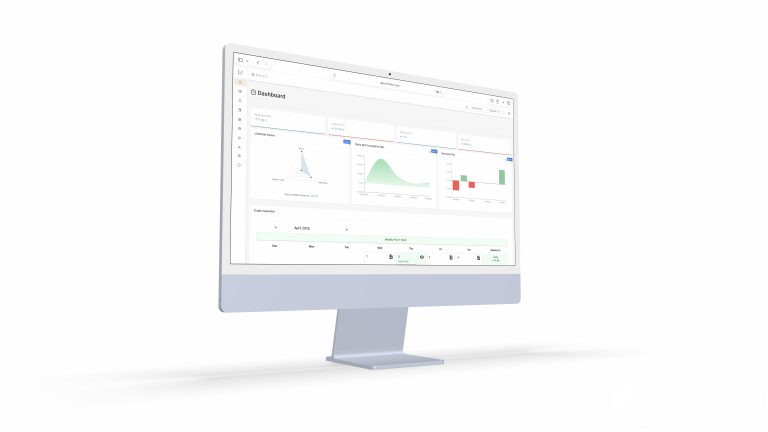
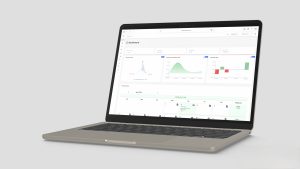
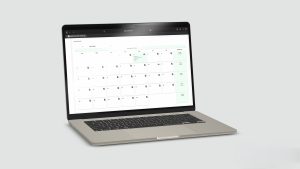
And that’s exactly why serious traders document their journey, track their performance, and continuously refine their process with platforms like LINCFOLIO.
Because the goal isn’t just to trade.
The goal is to improve.