Profitable Traders Are Boring: And That’s Exactly Why They Win
There is a strange misconception about trading.
We imagine the successful trader as someone sitting in front of six monitors, watching charts move violently, taking five trades before lunch, catching massive breakouts, and celebrating a huge green P&L at the end of the day.
Trading social media has made this image even stronger.
Big wins get posted.
Screenshots of ₹1 lakh profits get shared.
People celebrate 10x options trades.
Someone turns ₹20,000 into ₹2 lakh and suddenly everyone wants to know their strategy.
But there is a part of successful trading that rarely gets posted.
It is incredibly boring.
And that might be the point.
The Market Rewards Process, Not Excitement
A beginner often approaches trading with one question:
“How much can I make today?”
A consistent trader eventually starts asking different questions:
- Did I follow my setup?
- Did I respect my stop-loss?
- Was my position size appropriate?
- Did I enter because of my strategy or because of FOMO?
- Did I break one of my rules?
- Was this trade actually necessary?
- What does my data tell me?
That shift is enormous.
Because trading isn’t really about predicting what the market will do next.
You can’t control the market.
You can control how you participate in it.
Your entry.
Your risk.
Your position size.
Your exit.
Your discipline.
And your ability to learn from what happened.
The Most Dangerous Trade Is Often the Most Exciting One
Think about the trades you remember most.
It probably isn’t the completely ordinary trade where you followed your setup, risked 1R, took your exit and moved on.
It’s the crazy one.
The trade where you were down 40% and somehow recovered.
The expiry trade that suddenly exploded.
The position you doubled after a loss.
The option that went 3x.
The trade where you made far more than you expected.
Those trades create dopamine.
And dopamine can create a dangerous association:
Excitement = good trading.
But they aren’t the same thing.
A trade can be incredibly exciting and completely stupid.
And a trade can be incredibly boring and perfectly executed.
That’s something every trader eventually has to understand.
Profitable Traders Don’t Need to Trade
One of the biggest differences between struggling traders and consistent traders is their relationship with being inactive.
A struggling trader sees a flat market and thinks:
“There must be something I can trade.”
A disciplined trader can look at the same market and think:
“There is nothing here that fits my plan.”
And do nothing.
That’s difficult.
Because doing nothing feels like missing an opportunity.
But the market produces opportunities every day.
Your capital doesn’t need to participate in all of them.
Sometimes the best trade is the one you didn’t take.
They Don’t Chase Losses
Imagine a trader loses ₹5,000.
The next thought becomes:
“I need to make it back.”
So they take another trade.
They lose ₹7,000.
Now the emotional pressure increases.
Position size goes up.
Rules become flexible.
Another trade.
Another loss.
Suddenly, the original ₹5,000 loss has become ₹25,000.
Nothing changed about the market.
The trader changed.
This is where boring traders have an advantage.
They have predefined rules.
Maybe they have a daily loss limit.
Maybe they stop after a certain number of consecutive losses.
Maybe they reduce their size after a bad session.
Maybe they simply close the platform.
Whatever the system is, the important part is this:
Their emotions don’t get to rewrite the rules.
They Don’t Worship Win Rate
Another thing that looks impressive but can be misleading is win rate.
A trader might say:
“I win 80% of my trades.”
Sounds incredible.
But what happens if their average winning trade is ₹1,000 and their average losing trade is ₹6,000?
An 80% win rate doesn’t automatically make the strategy profitable.
This is why serious traders look beyond individual wins.
They look at:
- Expectancy
- Profit factor
- Average win
- Average loss
- Drawdown
- Risk-to-reward
- Trade frequency
- Setup performance
- Strategy performance
- Consistency over time
A single winning trade tells you almost nothing.
A large enough sample tells you something.
They Keep Records
Here’s where trading becomes less exciting, and far more useful.
A serious trader doesn’t rely entirely on memory.
Because memory is terrible at objective analysis.
You remember the massive winner.
You remember the painful loss.
You remember the trade you almost took.
But you don’t remember every ordinary trade with the same accuracy.
That’s why a trading journal matters.
When you record your trades, you create something much more valuable than a list of entries and exits.
You create evidence.
Evidence about your behavior.
Evidence about your strategy.
Evidence about your risk management.
Evidence about the conditions under which you perform best.
And eventually, patterns start appearing.
Maybe your win rate drops dramatically when you trade after 2 PM.
Maybe your best setups perform poorly on expiry days.
Maybe you consistently lose money when you increase position size.
Maybe one particular setup generates most of your profits.
Maybe your biggest losses happen after a previous loss.
You can’t reliably discover these patterns from memory.
You need data.
The Boring Trader Has an Unfair Advantage
Imagine two traders.
Trader A
Trades whenever something looks interesting.
Changes strategies frequently.
Increases size after winning streaks.
Trades emotionally after losses.
Doesn’t record every trade.
Judges performance based on today’s P&L.
Trader B
Uses predefined setups.
Has a risk limit.
Records every trade.
Reviews performance weekly.
Tracks strategy-level results.
Studies mistakes.
Adjusts based on evidence.
Trader A might have a spectacular day.
Trader B might have a boring day.
Trader A might make more money this week.
But over hundreds of trades, the difference becomes obvious.
One is chasing outcomes.
The other is building a process.
Boring Doesn’t Mean Passive
This is important.
Being a boring trader doesn’t mean you should become afraid of risk.
It doesn’t mean you should never take aggressive trades.
It doesn’t mean every trade should be tiny.
And it certainly doesn’t mean profitable traders never experience large gains or losses.
It means something much simpler:
Their decisions aren’t driven by the need for excitement.
They can take a high-conviction trade.
They can size appropriately.
They can accept a loss.
They can take a large winner.
And then they can close the platform and continue with their day.
No emotional roller coaster required.
Your P&L Isn’t Your Identity
One of the healthiest changes a trader can make is separating their identity from their daily P&L.
A ₹20,000 profit doesn’t make you a genius.
A ₹20,000 loss doesn’t make you a failure.
Both are individual outcomes.
What matters is whether the decision-making process that produced them is repeatable.
That’s why a trader should be able to look at a losing trade and say:
“I followed my plan. This was a good loss.”
And also look at a winning trade and say:
“I broke my rules. This was a bad win.”
That’s maturity.
Because good trading and profitable trading are not always the same thing in the short term.
A good decision can lose money.
A bad decision can make money.
Your job is to make enough good decisions that the probabilities eventually work in your favor.
The Goal Isn’t to Win Every Trade
The goal is not a 100% win rate.
The goal isn’t to catch every move.
The goal isn’t to predict every top and bottom.
The goal isn’t even to make money every day.
The goal is to build a process that has a positive expectancy over a meaningful sample size—and then execute that process consistently.
That’s why the best traders can look almost boring from the outside.
They aren’t constantly searching for the next big opportunity.
They’re protecting their ability to participate tomorrow.
Make Your Trading Boring
If you want to become a more consistent trader, try removing some excitement from your process.
Create rules before the market opens.
Define your maximum daily loss.
Define your position-sizing rules.
Define your setups.
Record your trades.
Review your performance.
Identify your mistakes.
Track which strategies actually make money.
Stop judging yourself by one trade.
Start judging yourself by your process over a meaningful sample.
And most importantly:
Stop trying to look like a successful trader.
Start operating like one.
The Irony of Trading
The internet will always make trading look exciting.
Massive P&Ls.
Fast cars.
Multiple screens.
Options exploding.
“1000% RETURN.”
But sustainable trading often looks nothing like that.
It looks like:
One setup.
One planned risk.
One recorded trade.
One review.
One small improvement.
Repeated hundreds of times.
And that’s the part nobody wants to post.
Because it isn’t exciting.
It’s boring.
But boring is repeatable.
And repeatability is where consistency begins.
Your Trading Journal Should Tell You the Truth
You don’t need another motivational quote telling you to “be disciplined.”
You need evidence.
You need to know where you’re making money, where you’re losing money, what you’re doing right, what you’re doing wrong, and which behaviors keep repeating.
That’s the purpose of a serious trading journal.
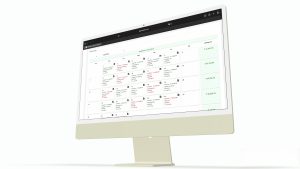
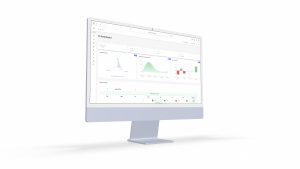
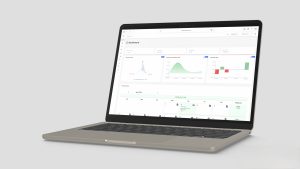
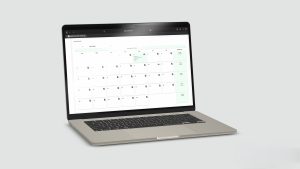
With LINCFOLIO, traders can turn their trade history into a clearer picture of their actual performance tracking trades, strategies, P&L, win rate, profit factor, equity curve and other performance insights in one place.
Because the objective isn’t to make trading more exciting.
It’s to make your decision-making more intelligent.
Trading doesn’t have to be exciting.
It has to be repeatable.
Profitable traders are boring.
And maybe that’s exactly what you should aim to become.