Journaling

Your Strategy Isn’t Broken—Your Process Is
Most traders keep changing strategies when results don’t improve. But the real issue isn’t the setup, it’s the process behind

Most retail traders approach trading like a hobby, a game, or worse, a gamble. They jump from strategy to strategy, chase signals, and hope the next trade will “make it all back.”
Serious traders don’t do this.
They treat trading like a business.
And that single mindset shift is often the difference between consistent profitability and permanent losses.
In this article, we’ll break down:
Why professional traders operate like business owners
The exact systems they use
Why journaling and performance tracking are non-negotiable
How you can transition from emotional trading to structured execution
A business does not make decisions based on:
Fear
Greed
Hope
Revenge
Yet most traders do.
Professional traders understand one core truth:
Emotion is the enemy of consistency.
That’s why they rely on:
Defined trading plans
Fixed risk rules
Pre-decided setups
Post-trade reviews
They don’t feel their way through the markets.
They execute a process.
Just like a business follows SOPs (Standard Operating Procedures), serious traders follow structured trading systems.
No business survives without tracking:
Revenue
Costs
Profit margins
Losses
Yet many traders:
Don’t know their real win rate
Don’t track drawdowns
Don’t understand expectancy
Can’t identify what’s actually working
This is why trading without a journal is gambling.
Entry & exit logic
Risk per trade
Risk-reward ratio
Setup performance
Emotional state during execution
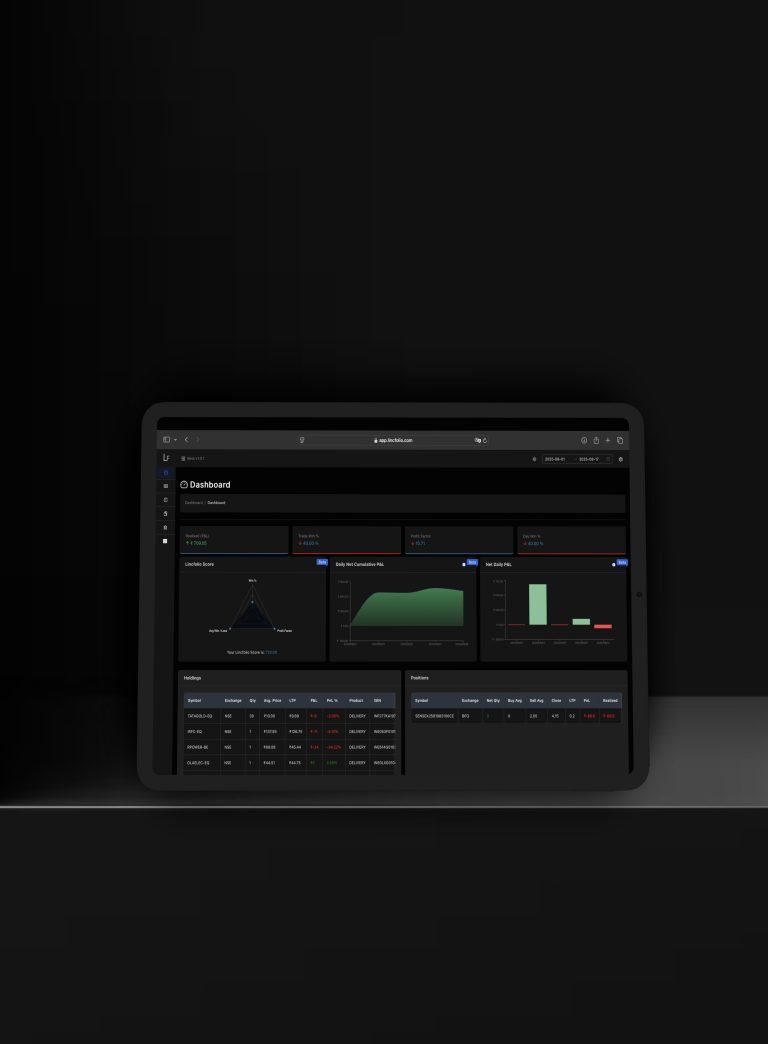
A trading journal turns random trades into measurable performance data.
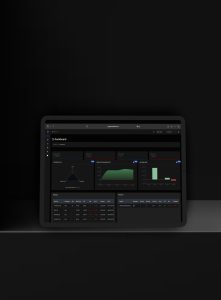
This is exactly why platforms like LINCFOLIO exist to help traders see their business clearly.
In business:
Expenses are controlled
Losses are capped
Survival comes first
In trading, risk management plays the same role.
Serious traders focus on:
Fixed percentage risk per trade
Maximum daily & weekly loss limits
Position sizing based on volatility
Protecting capital before chasing profits
They know:
You don’t need big wins, you need controlled losses.
Most traders fail not because their strategy is bad, but because their risk management is reckless.
Businesses hold:
Weekly reviews
Monthly performance meetings
Quarterly audits
Serious traders do the same.
They review:
What worked
What failed
Which setups performed best
Which mistakes repeat
This is where growth happens.
Without reviews:
Mistakes repeat
Bad habits strengthen
Progress stalls
With structured reviews:
Weaknesses are exposed
Strengths are doubled down
Performance compounds
A trading journal is not for recording trades, it’s for learning from them.
Serious traders don’t ask:
“How much can I make today?”
They ask:
“Can this system survive 500 trades?”
“Can I repeat this for years?”
They prioritize:
Consistency over excitement
Longevity over lottery wins
Process over prediction
That’s why professional traders survive bad markets, drawdowns, and losing streaks while impulsive traders disappear.
At its core, trading is a performance business, similar to:
Sports
Fund management
Professional investing
Top performers don’t rely on:
Motivation
Social media hype
Tips or signals
They rely on:
Data
Feedback loops
Continuous improvement
When traders start seeing themselves as operators of a trading business, everything changes:
Decisions become rational
Emotions lose control
Growth becomes measurable
Because treating trading like a business requires:
Accountability
Patience
Structure
Brutal honesty
It’s easier to blame:
The market
The broker
The strategy
Than to analyze your own behavior.
Serious traders do the opposite.
Here’s the truth most won’t tell you:
If you don’t track, review, and manage trading like a business, you are not trading. You are speculating.
The market doesn’t reward effort.
It rewards execution, discipline, and data.
That’s why serious traders:
Journal every trade
Analyze performance deeply
Control risk ruthlessly
Review themselves constantly
And that’s why platforms like LINCFOLIO are built not for everyone, but for traders who want to operate at a professional level.
 Ready to Treat Trading Like a Business?
If you’re done with randomness and want clarity, structure, and performance insight.
LINCFOLIO is built for that mindset.
Because serious traders don’t guess.
They measure, refine, and execute.
Most traders keep changing strategies when results don’t improve. But the real issue isn’t the setup, it’s the process behind

Most traders believe success comes from better strategies. In reality, the biggest difference between profitable and struggling traders is decision
Trading success isn’t about perfect entries or big screenshots.
It’s about consistency, risk control, emotional stability, and structured review.<br
Profitable traders don’t rely on luck, predictions, or flashy strategies. Their edge lies in silent habits, discipline, data, and ruthless
Why do most traders fail while a few stay consistently profitable? Because serious traders treat trading like a business. Learn
Most traders believe a higher risk-reward ratio guarantees profitability. In reality, this misconception is one of the biggest reasons traders