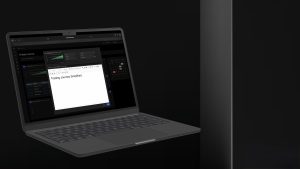
Journaling

Your Strategy Isn’t Broken—Your Process Is
Most traders keep changing strategies when results don’t improve. But the real issue isn’t the setup, it’s the process behind


 Introduction: The Stock Market Rewarded Discipline, Not Memory
Everyone enters the stock market with hope, ambition, and confidence.
But if you look at real numbers from Indian and global research, a brutal fact stands out:
Most retail traders lose money not because of the strategy but because of behavior.
We remember the green days.
We forget the emotional losses.
We justify the revenge trades.
And slowly, capital bleeds.
Professional traders, on the other hand, do something simple and powerful:
 They journal.
They track entries, exits, market conditions, emotions, risk, and review performance.
That’s the secret weapon nobody talks about.
Because clarity creates profit and memory creates mistakes.
 The Real Reason 80%+ Traders Fail: They Don’t Track Their Decisions
Most retail traders operate like this:
Buy because price “feels low”
Sell because of panic
Average down without logic
Chase after green candles
Exit winners too early
Hold losers too long
Ask them later why they made that trade, and suddenly everything is vague.
The market punishes vagueness.
The market rewards clarity.
A trading journal forces clarity on:
Why did I enter?
What was the risk?
What was the stop-loss?
What emotion was I feeling?
Did it fit my system?
If you cannot answer these questions that was gambling, not trading.
 Journaling Builds the Three Competitive Advantages in the Stock Market
 1.
1.
You begin to see patterns:
Do you panic when NIFTY falls?
Do you over-trade after a big win?
Do you buy breakouts late?
Once you notice a pattern,
you can fix the pattern.
 2.
2.
When you log 50–100 trades, you see the reality:
Maybe:
Your morning trades perform best
Your swing trades outperform intraday
Your risk-reward works only above 1:2
Your accuracy increases when volatility drops
Suddenly you are building a system not reacting to noise.
 3.
3.
Confidence comes from:
Statistics
Measured improvement
Controlled risk
Not from “hope.”
A journal gives you data.
Data gives you an edge.
 What Happens When You Review Your Trades Weekly?
A weekly review is a weapon.
You identify:
Best setups
Worst mistakes
Emotional weaknesses
Capital leaks
Winning patterns
Professional traders do not improve during trading.
They improve after hours, reviewing journal notes.
That’s where breakthroughs happen.
 Journaling Is the Shortcut to Becoming Consistent
Consistency is not magic.
Consistency is documentation.
If you record:
Price context
Market direction
Sector behavior
R:R ratio
Mistakes
Emotions
You become better every week.
That’s compounding not just money, but skill.
 Long-Term Investors Need Journals Even More
Investing is not about today.
It’s about decades.
Investors need journals to track:
Why they bought the stock
Fundamentals
Quarterly results reactions
Management commentary
Conviction level
Holding rationale
Portfolio allocation
This prevents emotional exits and panic selling.
Because investors lose money not by choosing bad companies
but by failing to HOLD great companies.
A journal strengthens conviction.
 The Biggest Advantage: Emotional Control
Every trader fights these enemies:
Fear
Greed
Impulse
Revenge trading
FOMO
Journaling exposes emotions in writing.
Once emotions are seen, they lose power.
A written weakness becomes a corrected behavior.
 The Journal is Your Accountability Partner
No trader succeeds alone.
A journal is:
Coach
Mirror
Risk Manager
Psychologist
Performance Analyst
It’s the only tool that improves every system, from scalping to swing to investing.
 The Difference Between Retail Traders and Professionals
Beginners look for:
Hot tips
News
Telegram calls
Rumors
“Guaranteed setups”
Professionals look for:
Data
Patterns
Psychology
Risk management
Documentation
That’s why professionals survive decades.
Most retail traders don’t survive their first year.
 Why a Premium Digital Journal Wins Over a Notebook
A physical diary cannot:
Generate performance analytics
Track win-rate
Track risk-reward
Separate emotions
Tag setups
Provide dashboards
A digital platform transforms:
 raw trades into insights
insights into systems
systems into profits
This is where LINCFOLIO becomes the game-changer.
 How LINCFOLIO Accelerates Your Growth
LINCFOLIO is built for traders who want:
Serious tracking
Elite discipline
Luxury interface
Smart analytics
Trade reviews
Accountability
Custom journaling
Investor-level documentation
It’s not a notebook.
It’s a performance engine.
If you want to stop guessing — and start improving — this is your tool.
Think of it as the gym for your stock-market brain.
 Final Truth: You Can’t Improve What You Don’t Measure
If you want to:
Increase win-rate
Reduce emotional trades
Build a system
Enjoy confidence
Grow long-term wealth
Start journaling.
Because the fastest way to success is simple:
Record. Review. Refine. Repeat.
Your next profitable version starts here.
Explore LINCFOLIO and turn your stock-market journey into a documented success story.
Most traders keep changing strategies when results don’t improve. But the real issue isn’t the setup, it’s the process behind

Most traders believe success comes from better strategies. In reality, the biggest difference between profitable and struggling traders is decision
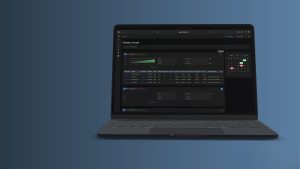
Trading success isn’t about perfect entries or big screenshots.
It’s about consistency, risk control, emotional stability, and structured review.<br

Profitable traders don’t rely on luck, predictions, or flashy strategies. Their edge lies in silent habits, discipline, data, and ruthless
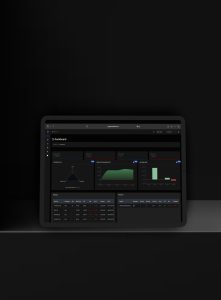
Why do most traders fail while a few stay consistently profitable? Because serious traders treat trading like a business. Learn

Most traders believe a higher risk-reward ratio guarantees profitability. In reality, this misconception is one of the biggest reasons traders