Introduction: Access Has Increased, Discipline Has Not
The Indian stock market has evolved rapidly.
Today, traders have instant access to real-time data, advanced charting tools, and low-cost brokerage platforms.
Yet despite this progress, one problem remains unchanged: most traders struggle with consistency.
Losses are often blamed on the market, volatility, or bad timing.
In reality, the root cause is usually simpler a lack of structure and self-review.
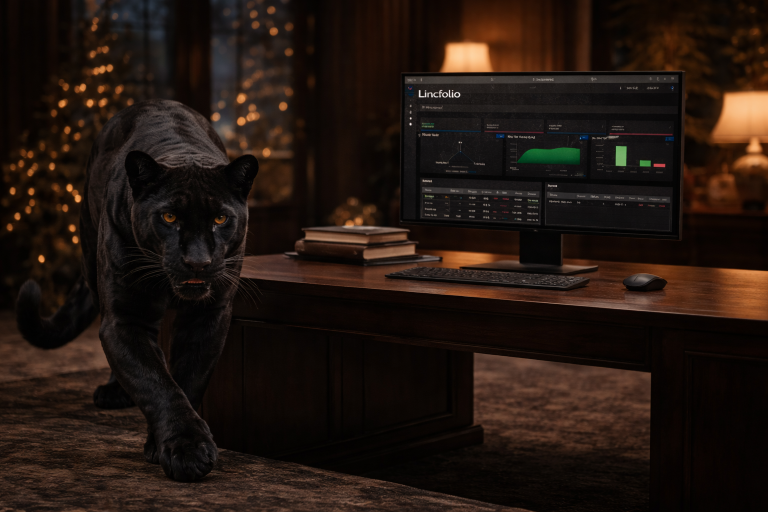
This is why experienced traders rely on a trading journal, and why solutions like Lincfolio, India’s first trading journal platform, are becoming essential for those who take trading seriously.
The Real Reason Most Traders Fail to Stay Profitable
Many traders focus obsessively on:
Very few focus on:
Without tracking decisions, mistakes repeat silently.
A trader who does not review past actions is trading blind regardless of how advanced their strategy looks on paper.
What a Trading Journal Actually Solves
A trading journal is not just a log of trades.
It is a performance analysis system.
When used correctly, a trading journal helps traders:
-
identify profitable and unprofitable patterns
-
understand emotional triggers
-
evaluate risk-reward consistency
-
measure execution quality
-
improve decision-making over time
This level of clarity is difficult to achieve mentally or through memory alone which is why structured tools like India’s first trading journal platform have gained importance among disciplined traders.
Discipline Is Built Through Measurement
Discipline in trading is not about motivation.
It is about accountability.
Elite traders do not rely on feelings or intuition alone.
They rely on data especially data about themselves.
By reviewing journal entries, traders begin to see:
-
which setups deserve capital
-
when overtrading occurs
-
how emotions impact exits
-
why certain days perform poorly
Over time, this awareness turns into behavioural control a core trait of consistently profitable traders.
Trading Psychology: The Invisible Edge
Every trader faces the same psychological challenges:
The difference between average and elite traders is how quickly they identify and correct these patterns.
A structured trading journal exposes psychological errors early.
Instead of repeating mistakes for months, traders adjust within weeks.
This is why serious traders increasingly adopt digital journaling systems, especially platforms like Lincfolio, India’s first trading journal platform, designed specifically for modern Indian traders.
Risk Management Is Where Journaling Pays Off
Most traders ask:
“How much can I make?”
Professional traders ask:
“How much am I risking?”
A trading journal enforces risk awareness by tracking:
-
position sizing
-
stop-loss discipline
-
drawdowns
-
reward-to-risk ratios
When risk is measured consistently, confidence improves.
Losses become manageable.
Capital longevity increases.
This shift alone dramatically improves long-term trading outcomes.
Why Indian Traders Need Structured Journaling More Than Ever
The Indian markets are dynamic:
-
frequent news-driven volatility
-
index movements influenced by global cues
-
high retail participation
In such an environment, emotional trading is common.
A trading journal acts as a stabilizer, grounding decisions in data rather than noise.
That’s why many serious traders are moving away from spreadsheets and toward dedicated platforms like India’s first trading journal platform, built to simplify tracking, analysis, and review.
From Random Results to Repeatable Performance
Random profits feel good but they don’t scale.
Repeatable performance comes from:
-
disciplined execution
-
consistent review
-
gradual improvement
A trading journal transforms trading from a gamble into a process.
Over time, traders begin to see:
-
which strategies align with their personality
-
which timeframes suit them best
-
where capital is being wasted
This clarity allows traders to refine rather than restart a key trait of long-term survivors in the stock market.
Trading as a Craft, Not a Shortcut
Serious traders view trading as a craft.
They understand that:
A trading journal supports this mindset by making improvement intentional.
Instead of chasing every opportunity, traders focus on:
This approach is increasingly common among traders using Lincfolio, India’s first trading journal platform as part of their daily routine.
The Future of Trading in India Is Structured
The next generation of successful traders in India will not be defined by:
They will be defined by:
As awareness grows, tools like India’s first trading journal platform Lincfolio will play a central role in shaping how serious traders build confidence, consistency, and long-term profitability.
Conclusion: Measure to Improve, Improve to Last
Every trader wants profits.
Few commit to the process that creates them.
A trading journal is no longer optional for serious traders, it is foundational.
Those who measure their actions gain clarity.
Those who review their performance gain control.
Those who build discipline gain longevity.
And in a competitive market, longevity is the greatest edge of all.