
Journaling

Your Strategy Isn’t Broken—Your Process Is
Most traders keep changing strategies when results don’t improve. But the real issue isn’t the setup, it’s the process behind

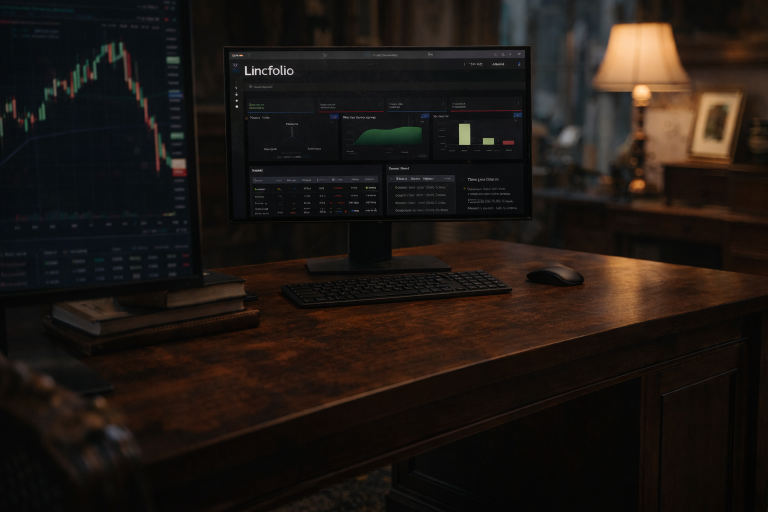
Every year, lakhs of people enter the stock market with dreams of financial freedom. They watch charts, follow news, copy strategies, and place trades.
Yet, statistics remain brutal.
Over 90% of retail traders lose money consistently in the stock market.
Not because they lack intelligence.
Not because markets are rigged.
But because they lack structure.
This article breaks down why most traders and investors fail, what separates the consistently profitable minority, and the single habit that quietly compounds success over years.
Whether you are a short-term trader, swing trader, or long-term investor, this may be the most important thing you read this year.
Most traders believe success comes from:
Better indicators
Faster execution
Insider-like tips
The “perfect” setup
But after years of observing market behavior, one truth stands clear:
Strategy is rarely the main problem. Execution and discipline are.
Two traders can use the same strategy.
One compounds wealth.
The other blows up.
Why?
Because markets punish:
Emotional decisions
Overtrading
Revenge trades
Poor risk management
Inconsistent position sizing
And here’s the uncomfortable truth:
 Human memory is unreliable under pressure.
Most traders rely on:
Mental notes
Screenshots
Telegram messages
“I remember what went wrong”
But memory fades. Emotions distort reality.
After a loss, traders either:
Justify bad decisions
Forget mistakes
Repeat the same errors
Without written data, there is no feedback loop.
And without feedback, there is no improvement.
After studying successful traders and investors across decades, one habit consistently appears:
Not occasionally.
Not when things go wrong.
But consistently.
A proper trading & investing journal records:
Entry & exit logic
Risk taken
Emotional state
Market conditions
Outcome analysis
This turns trading from guesswork into a measurable business.
Journaling does three powerful things:
You think twice before breaking rules when you know it will be recorded.
You start noticing:
Which setups actually work
Which days you overtrade
Which emotions cost you money
Confidence doesn’t come from wins.
It comes from knowing your edge statistically.
Many believe journaling is only for traders.
That’s a mistake.
Improves win-rate
Controls emotions
Reduces impulsive trades
Clarifies long-term thesis
Prevents panic selling
Tracks decision quality, not just returns
Successful investors don’t just track portfolios.
They track decision logic.
Most traders try:
Excel sheets
Notebooks
Random apps
They fail because:
Manual work kills consistency
No analytics = no insight
No structure = incomplete data
A journal must be:
Simple
Structured
Insight-driven
Built specifically for markets
Anything else becomes abandoned after a few weeks.
Imagine running a company without:
Financial records
Performance metrics
Monthly reviews
That’s how most people trade.
LINCFOLIO was built to change that.
It’s not just a journal.
It’s a performance system for serious market participants.
LINCFOLIO focuses on:
Structured trade & investment logging
Performance analytics
Psychological tracking
Clean, distraction-free design
No noise.
No hype.
Just clarity.
Because the goal is simple:
Make better decisions tomorrow than you made today.
Markets reward patience, discipline, and reflection.
Those who journal:
Improve faster
Lose less during bad phases
Compound skills along with capital
Those who don’t:
Repeat mistakes
Change strategies endlessly
Burn out emotionally
The market doesn’t care how passionate you are.
It only rewards measurable improvement.
If you treat the stock market casually, it will treat your capital casually.
If you treat it like a profession,
track it like a business,
and review it like a craftsman.
The odds finally tilt in your favor.
Your future self will thank you for the data you start collecting today.
Start building discipline, clarity, and consistencyExplore LINCFOLIO — Built for Serious Traders & Investors
Most traders keep changing strategies when results don’t improve. But the real issue isn’t the setup, it’s the process behind

Most traders believe success comes from better strategies. In reality, the biggest difference between profitable and struggling traders is decision
Trading success isn’t about perfect entries or big screenshots.
It’s about consistency, risk control, emotional stability, and structured review.<br

Profitable traders don’t rely on luck, predictions, or flashy strategies. Their edge lies in silent habits, discipline, data, and ruthless
Why do most traders fail while a few stay consistently profitable? Because serious traders treat trading like a business. Learn

Most traders believe a higher risk-reward ratio guarantees profitability. In reality, this misconception is one of the biggest reasons traders