Most people imagine trading success as a perfect chart entry, a massive profit screenshot, or a month where every trade closes green.
That image is tempting but it’s incomplete.
Real trading success is quieter, more structured, and far more sustainable than what social media usually shows. It’s not built on luck or constant excitement. It’s built on process, discipline, and self-awareness.
Let’s redefine what trading success actually looks like without hype, without extremes, and without illusions.
1. Trading Success Is Consistency, Not Perfection
Successful traders don’t aim to win every trade. They aim to execute well, repeatedly.
They understand:
Instead of chasing perfect entries, they focus on:
Consistency beats brilliance. Every time.
2. Profitable Traders Think in Probabilities
Trading success isn’t about being “right.”
It’s about managing uncertainty.
Successful traders:
Accept that no setup works every time
Focus on expectancy, not predictions
Let statistics play out over a series of trades
They don’t react emotionally to single outcomes.
They judge performance over weeks, months, and quarters.
That shift from prediction to probability is a turning point for most traders.
3. Risk Control Comes Before Profit
One of the clearest signs of trading success is capital preservation.
Profitable traders:
Know their maximum risk per trade
Size positions intentionally
Avoid emotional overexposure
They don’t trade to “make money today.”
They trade to stay in the game long enough for their edge to work.
Longevity is the real advantage.
4. Trading Success Is Boring (And That’s a Good Thing)
If trading feels thrilling all the time, something is usually off.
Successful trading often looks like:
Waiting more than trading
Repeating the same setups
Ending the day without strong emotions
There’s no constant adrenaline.
No need for validation.
No urge to overtrade.
Boring trading is focused trading and focused trading is profitable trading.
5. Successful Traders Track Everything
You can’t improve what you don’t measure.
Real trading success includes:
Tracking trades isn’t about judgment it’s about clarity.
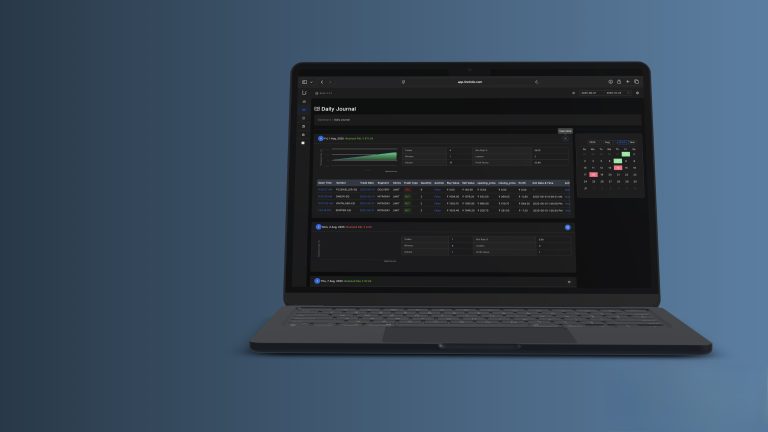
This is where structured journaling platforms like LINCFOLIO become essential not just to log trades, but to understand patterns, behavior, and progress over time.
Data turns experience into insight.
6. Emotional Stability Is a Core Skill
Profitable traders aren’t emotionless but they are emotionally regulated.
They’ve learned how to:
They don’t trade to prove anything.
They trade to execute a plan.
That calm confidence doesn’t come overnight it’s built through awareness, reflection, and discipline.
7. Trading Success Is Personal, Not Performative
Real success doesn’t require:
It looks like:
Most successful traders operate quietly.
They measure success by process quality, not attention.
8. Growth Comes From Review, Not More Trades
Successful traders don’t trade more to improve.
They review better.
They regularly ask:
This feedback loop, execute → track → review → refine—is the foundation of long-term profitability.
Final Thoughts: Redefining Trading Success
Trading success isn’t dramatic.
It’s:
It’s built quietly, trade by trade, decision by decision.
And it’s sustained by systems not emotions.
If you’re serious about trading long term, the goal isn’t to look successful.
The goal is to be consistently effective.
That’s what real trading success actually looks like.