Most traders track profits. Professional traders track performance.
In the world of trading, profits are often celebrated but profits alone don’t tell the truth. Two traders can make the same amount of money, yet one is building a sustainable system while the other is one bad week away from blowing up.
The difference lies in metrics.
Professional traders, hedge funds, and disciplined investors track deep performance metrics that most retail traders completely ignore. These metrics don’t just show what happened, they explain why it happened.
In this blog, we’ll break down the key trading metrics every serious trader must track, why most traders don’t, and how tracking them can dramatically improve consistency, discipline, and long-term profitability.
Why Most Traders Track the Wrong Metrics
Most traders focus on:
Daily P&L
Monthly profit
Account balance
These are outcome metrics, not process metrics.
Outcome metrics are lagging indicators. By the time your P&L tells you something is wrong, the damage is already done.
Elite traders track behavioral, risk, and system-based metrics, because process creates profits, not the other way around.
1. Risk-to-Reward Ratio (R:R), The Foundation Metric
What it is:
The ratio between how much you risk on a trade versus how much you aim to make.
Why it matters:
A trader with a 40% win rate can still be highly profitable if their R:R is strong.
A trader with a 70% win rate can still lose money with poor R:R.
What most traders miss:
They calculate R:R after the trade, not before entering.
Pro tip:
Track:
Planned R:R
Actual R:R
Deviation from plan
Over time, this reveals whether your edge comes from discipline or luck.
2. Maximum Drawdown (The Metric That Saves Accounts)
What it is:
The largest peak-to-trough loss in your account over a period.
Why it matters:
Drawdown defines:
Psychological pressure
Capital survival
Strategy sustainability
Most traders don’t fail because they lack winning trades, they fail because drawdowns break them emotionally.
What elite traders track:
If you don’t know your maximum tolerable drawdown, you don’t know your real risk.
3. Expectancy — The Truth About Your Strategy
Formula:
Expectancy = (Win Rate × Average Win) − (Loss Rate × Average Loss)
Why it matters:
Expectancy tells you how much you can expect to make per trade over the long run.
A positive expectancy means:
A negative expectancy means:
What most traders do wrong:
They abandon strategies during temporary losses without understanding expectancy.
Tracking expectancy builds confidence rooted in data, not emotion.
4. Emotional State Per Trade (The Invisible Edge)
What it is:
Your psychological condition before, during, and after a trade.
Examples:
Calm
Fearful
Overconfident
Revenge-driven
Hesitant
Why it matters:
More than 60% of trading mistakes are emotional, not technical.
By tracking emotions, patterns emerge:
Losses after overconfidence
Mistakes after consecutive wins
Overtrading during stress
This is where journaling becomes a weapon, not a diary.
5. Rule Adherence Score (Most Ignored Metric)
What it is:
A score that measures how closely you followed your trading plan.
For example:
Entry as per plan? (Yes/No)
Stop-loss respected? (Yes/No)
Position size correct? (Yes/No)
Why it matters:
A losing trade with 100% rule adherence is a good trade.
A winning trade with broken rules is a dangerous trade.
Elite traders reward discipline, not just profits.
Tracking rule adherence separates professionals from gamblers.
6. Trade Frequency vs Quality Ratio
What it is:
The relationship between:
Number of trades
Quality of setups taken
Why it matters:
Overtrading is one of the biggest silent killers of trading accounts.
By tracking:
You learn when to trade less, not more.
7. Time-Based Metrics (Patience Is Measurable)
Most traders ignore:
Why it matters:
Markets reward patience, not activity.
You may discover:
Your best trades happen only in first 90 minutes
Long holds outperform quick exits
Impulsive trades lose faster
Time metrics turn randomness into structure.
8. Mistake Cost (A Brutally Honest Metric)
What it is:
The total money lost due to:
No stop-loss
Over-leveraging
Emotional exits
Chasing trades
Why it matters:
Mistake cost shows how profitable you should have been.
Many traders are already profitable,
they’re just leaking money through repeated mistakes.
This metric creates accountability, which most traders avoid.
Why Most Traders Don’t Track These Metrics
Because:
It’s uncomfortable
It exposes weaknesses
It requires discipline
It removes excuses
But this is exactly why tracking metrics creates an edge.
How LINCFOLIO Changes the Game
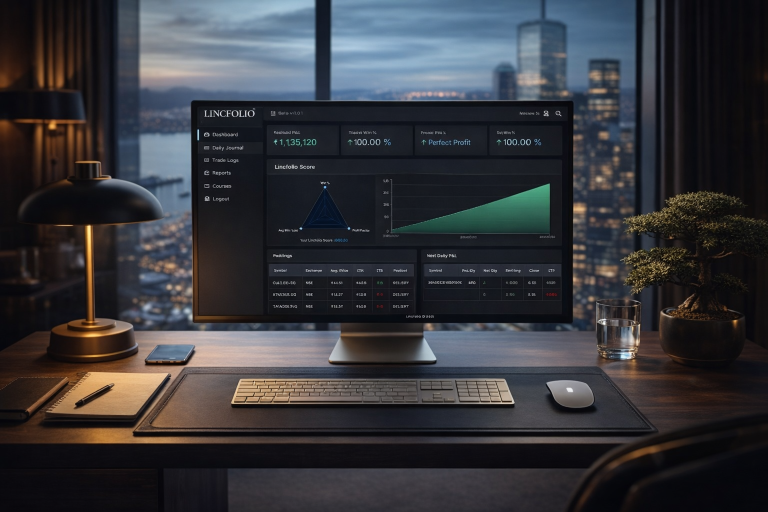
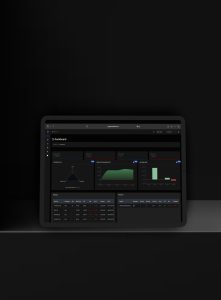
Lincfolio is built for traders who want clarity, control, and consistency.
Instead of scattered spreadsheets and emotional memory, Lincfolio allows you to:
Track advanced performance metrics automatically
Log emotional and behavioral data
Review weekly and monthly performance visually
Build a system, not just record trades
Luxury in trading isn’t aesthetics alone, it’s precision, data, and discipline.
Final Thoughts: Track What Actually Matters
If you only track profits, you’re guessing.
If you track metrics, you’re building a business.
Markets don’t reward hope.
They reward process, discipline, and self-awareness.
The traders who win long-term are not the smartest, they are the most measured.
Ready to trade with clarity, not chaos?
Start tracking the metrics that actually move the needle with LINCFOLIO.